The Evolution of AI Over the Past...
Read more
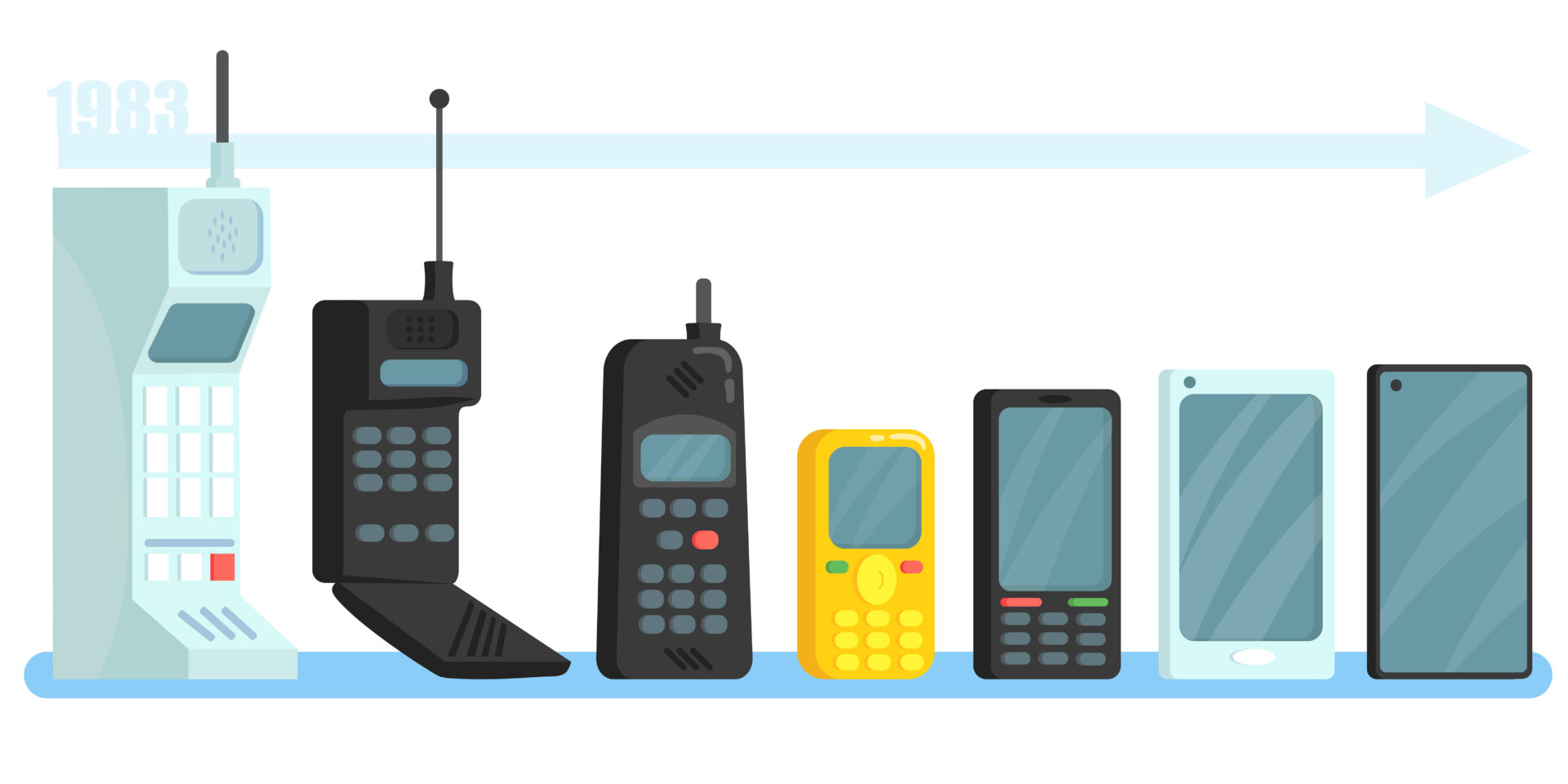
Thirty Years Since the Arrival of the “Smartphone”
“A smartphone is like a computer in the palm of your hand that also works as a phone. It has a touchscreen, apps to help you organize your life (such as a calendar and contacts), and a system that lets you add more apps for the internet, music, videos, and more.”
The first smartphone, the IBM Simon, was released in 1993. It had a touchscreen that allowed users to access features such as the calendar and calculator. Although it wasn't called a “smartphone” at the time, it laid the groundwork for today's cell phones. Now, advanced smartphones enable features such as augmented reality, which displays information on the screen about what you see through the camera.
First version
The first prototype of what would become the IBM Simon was unveiled in November 1992 as the “Sweetspot” at a technology trade show in Las Vegas. It was an innovative device that combined telephone functions with fax, email, and mobile search, in addition to featuring a calendar, address book, and digital news.
The commercial version, unveiled by BellSouth in November 1993, is considered the IBM Simon's public debut at a conference in Florida. It first went on sale in August 1994 for $899 with a two-year contract, and the price was later reduced to $599, selling approximately 50,000 units in six months.
According to Bill Buxton of Microsoft Research, the IBM Simon was the first smartphone. It introduced touchscreens to phones, offering capabilities beyond just making calls. It supported voice calls, email, a calendar, an address book, a calculator, and drawing with a stylus.
Described as a true “personal communicator” by Rich Guidotti of BellSouth, the IBM Simon weighed about 500 grams, featured an LCD screen, and had standard cell phone functions. It was the first to integrate a computer into a cell phone, offering a graphical interface with icons to make it easy to use.
Other features
The IBM Simon had limited storage capacity, but it could be expanded with a PCMCIA memory card to receive messages and information services. It also allowed users to answer pager calls, update their calendar, and send emails from a computer.
Using a stylus, users could create faxes and notes on the device's touchscreen. To type in apps such as email, it displayed a full keyboard on the LCD screen. It also offered a predictive keyboard to make typing easier with larger letters.
Although it had little commercial success for half a year due to its weight, size, and short battery life (one hour), the IBM Simon is considered the precursor to modern smartphones, which now number more than 8 billion worldwide, three decades after its launch.